Why Savannah’s squares are the city’s real hotel map
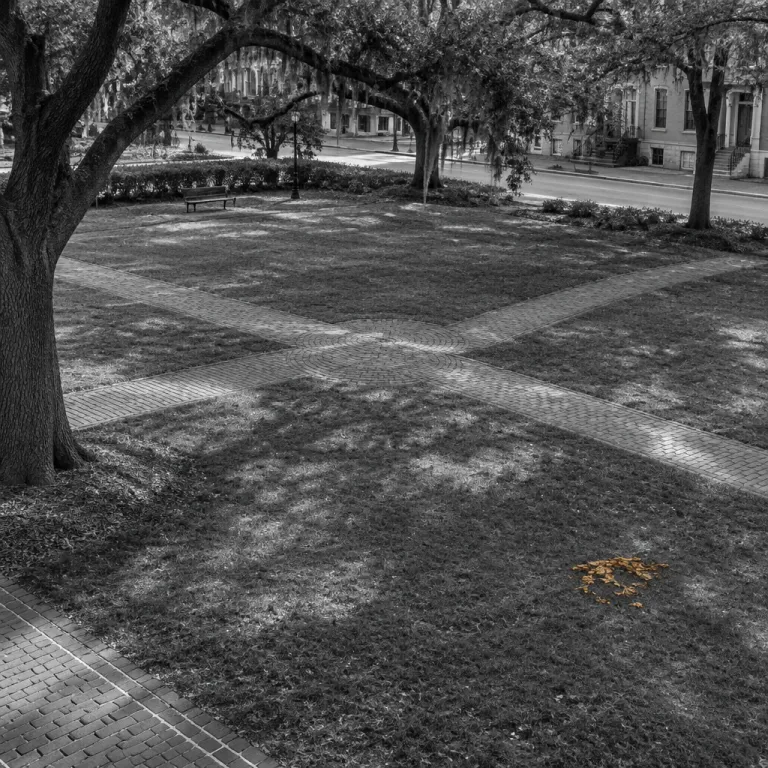
Stand in any square in Savannah and you are already holding the city’s most elegant map. James Oglethorpe’s ward plan, with each square laid at the center of a compact unit of streets and lots, still governs how you move, sleep and eat in Savannah, Georgia. If you care about Savannah history and want your hotel choice to feel intentional, you start with the squares, not the room photos.
The Oglethorpe plan is simple to read ; each ward is a square surrounded by four “trust” lots for public buildings and eight “tything” lots for a house or two on each side. That means every historic square is both a park and a compass, so when you step out of a lobby you can instantly orient yourself by the next canopy of trees and the next monument in view. A visitor who understands this grid can choose between quiet residential streets or lively corners of the city with precision, instead of guessing from a vague map pin.
Think of the Savannah squares as a chain of rooms in one long outdoor house, each with its own mood and soundscape. Johnson Square, the first and still one of the largest, feels like the city’s front hall, while smaller places like Troup Square or Washington Square feel more like private sitting rooms. When you weigh hotels in Savannah, Georgia, you are really choosing which of these rooms you want to step into first thing in the morning and last thing at night.
“A ward is a block unit built around a square with surrounding lots for homes and public buildings” ; that single line explains why lodging and daily life are so tightly interwoven here. Because every square Savannah ward was designed to be self sufficient, you still find cafés, churches, offices and at least one notable house or inn located within a short walk of the central green. The result is that Savannah historic streets remain walkable in a way that feels rare in an American city, and that walkability should be your first filter when you compare places to stay.
Look at a map before you book and trace Bull Street from Johnson Square down to Forsyth Park, passing Wright Square, Chippewa Square, Madison Square and Monterey Square in sequence. That single axis of squares Savannah residents use daily is also the backbone for most visitors, because it links the riverfront to the heart of the Historic District in about 1,5 kilometres of shaded, monument studded parkland. A hotel located anywhere along or just off this line will give you a front row seat to Savannah squares history and an easy walk home under live oaks draped in Spanish moss.
North of Johnson Square, the grid tips toward the Savannah River and the cobbled lanes of River Street, where the city’s maritime past still shapes the skyline. Stay too close to the bars and music venues here and you will feel the nightlife in your room, but stay one square south and the noise drops while the views remain. This is why the question is never simply “Which hotel ” but “Which square Savannah address fits the way I want to sleep and stroll ”.
Reading a square: monuments, trees and façades as a timeline
Once you arrive, learning to read each square turns a casual walk into a guided tour. Start with Johnson Square and Wright Square, the two earliest spaces in the city, where the layout still reflects the original Oglethorpe vision and where Savannah history is written in stone and bronze. When you stand between them on Bull Street, you can feel how the city grew outward from this tight pair of greens.
In Johnson Square, the tall monument to General Nathanael Greene rises above a ring of mature trees, and the surrounding bank buildings tell a story of Savannah, Georgia as a commercial hub. Cross to Wright Square and you find a different mood, with the Tomochichi monument and the courthouse reminding you that this was once the civic heart of the colony. Together, Johnson Square and Wright Square show how each square Savannah offers a different chapter of the same narrative, and how the monuments anchor that story.
Move east to Reynolds Square and you enter a more intimate room of the city, framed by the Lucas Theatre and the famous Olde Pink House restaurant in a stately colonial era house. Here the trees feel closer, the traffic lighter, and the square is often filled with theatre goers and diners rather than office workers, which changes the soundtrack under the branches. A hotel located near Reynolds Square or Washington Square will usually feel calmer at night than one right beside Johnson Square, even though all of them sit within the same compact Savannah historic grid.
Washington Square, near the eastern edge of the Historic District, is named for the first president and edged by some of the city’s most photogenic wooden houses. The square’s low monuments and generous lawns make it a favourite for picnics, and the streets around it still feel residential, with porches, bicycles and dogs under the trees. If you want a stay that leans into neighbourhood life rather than nightlife, Washington Square and nearby Greene Square are strong anchors.
Head south and the mood shifts again at Madison Square, where the Pulaski monument stands guard over a crossroads of shops, churches and inns. Here, Savannah squares history intersects with military memory, and the façades around the square show a mix of Gothic revival churches and brick townhouses that mark the city’s nineteenth century ambitions. A room overlooking Madison Square lets you watch tour groups swirl around the monument by day, then enjoy a quieter, lamp lit scene once the last carriage has rolled away.
Continue down Bull Street to Monterey Square and you reach one of the most coveted addresses in the city, framed by the Mercer Williams House and some of the most intact rows of historic townhomes. The trees here form a dense canopy, and the square feels almost like a private garden, which is why many travellers choose hotels and inns located within a block or two. If you are drawn to architecture, this is where Savannah squares, façades and stories converge most dramatically, and where staying nearby turns every walk into a lesson in proportion and detail.
For travellers who want their lodging to echo this architectural richness, the collection of historic inns in the core of the city is a natural fit. Guides to Savannah, Georgia historic inns for an elegant stay in the heart of the city often organize recommendations by square, because the square you face shapes your light, your noise level and your first morning view. That is the essence of Savannah squares history in practice ; the urban design is not an abstract diagram, it is the frame around your coffee cup and your room key.
Choosing your base: which square matches your travel mood
Once you can read the grid, the next step is to match a square to your priorities. If you want to be close to the riverfront energy but not swallowed by it, look at hotels located between Johnson Square and Reynolds Square, where you can reach River Street in minutes but sleep on calmer streets. Those blocks let you enjoy the city’s busiest restaurants and shops while still stepping back into a quieter square Savannah setting at night.
Travellers who crave deep quiet and a more residential feel should look south of Liberty Street, where the city’s guidance that “it offers quieter streets and charming inns away from night noise” holds true. Around Lafayette Square, Troup Square and Monterey Square, the rhythm slows, the trees seem taller and the houses feel more lived in than staged, which suits cultural travellers who want to hear church bells rather than bar music. A room near Lafayette Square, with its fountain and views of the Cathedral Basilica of St John the Baptist, gives you a daily ritual of crossing a green framed by some of the most refined façades in Savannah, Georgia.
Families often do well near Forsyth Park, the grand southern anchor of the Historic District, where the famous fountain and long lawns act as a playground and promenade. Squares Savannah locals love, such as Chatham Square and Pulaski Square, sit just west of the park and offer a buffer of residential calm between the park and the busier commercial streets. A hotel located within a short walk of Forsyth Park lets you use the park as your morning and evening living room, while still reaching Madison Square or Monterey Square in a ten to fifteen minute stroll.
Pet owners and long stay guests should think in terms of dog friendly routes and shaded loops between squares. A base near Orleans Square or Ellis Square, for example, gives you quick access to both the civic core and the newer public plaza where Ellis Square was restored as a gathering place, with plenty of benches under trees. For more tailored advice on where to stay with animals while still enjoying Savannah squares history, resources on how films shot in Savannah shape where you should stay in the Historic District can be surprisingly useful, because film locations often cluster around the most walkable squares.
Film buffs, in particular, may want to base themselves near Chippewa Square, Madison Square or Monterey Square, where many famous scenes have been shot under the live oaks. These squares show up on screen precisely because the combination of monuments, trees and intact façades tells the story of Savannah history in a single frame. Choosing a hotel within a block or two means you can walk the same routes at dawn or dusk, when the light is soft and the tour groups have thinned.
Travellers who prefer a more urban edge might look west toward Orleans Square and the area located along Barnard Street, often described as located Barnard in older guides. Here, the proximity to the Savannah Civic Center, newer hotels and restored warehouses gives a slightly more contemporary feel, while the square itself still offers shade and a sense of enclosure. Staying near Orleans Square or Ellis Square also puts you close to the City Market area, where the morning news kiosks, cafés and galleries create a different kind of soundtrack than the riverfront bars.
If you are torn between several neighbourhoods, sketch your likely day on a simple map of the city. Mark the squares you most want to linger in — perhaps Washington Square for its houses, Lafayette Square for its church spires, and Forsyth Park for its fountain — then look for hotels that sit on the shortest walking triangle between them. The right base is not just central on paper ; it is central to your personal version of Savannah squares history.
From grid to experience: how the squares shape every step of your stay
Understanding the Oglethorpe grid turns Savannah from a pretty backdrop into a legible, livable city during your stay. Because the streets intersect at regular intervals and every few blocks open into a square, you are never more than a short walk from shade, a bench and a landmark monument. That rhythm of street, trees, square, street again is what makes walking here feel effortless, even in the heat.
Stay near Johnson Square or Wright Square and your days will be punctuated by the hum of office workers, church bells and the occasional protest or civic event. Choose a base near Reynolds Square, Madison Square or Reynolds Square and you will hear more clinking glasses and theatre chatter, as visitors and locals share the same sidewalks under the oaks. Opt for Lafayette Square, Troup Square or Washington Square and the soundtrack softens to footsteps on brick, dogs on leashes and neighbours greeting each other on their house steps.
The choice of square also shapes how you navigate after dark, when the city’s character deepens. A hotel near Monterey Square or Forsyth Park gives you a walk home along Bull Street or Whitaker Street that feels almost ceremonial, passing monuments, iron fences and gas lamps under a tunnel of trees. In contrast, a base closer to Ellis Square or Orleans Square offers a more animated route, with late night cafés, music and the glow of shop windows reflecting Savannah history in a contemporary key.
Even practical questions, such as where to park or how far you will carry luggage, are easier when you think in terms of wards and squares. Because each ward was designed to hold both public buildings and private homes, many garages and lots are located just off the main greens, especially near Johnson Square, Ellis Square and the streets around the City Market area. If you prefer to arrive by car but live on foot once you are checked in, aim for a hotel that sits one block off a major square Savannah locals use daily, so you can park once and forget the vehicle.
For travellers with pets or specific accessibility needs, the grid can be tuned even more finely. Routes that link flatter streets and smoother pavements — for example, between Troup Square, Lafayette Square and Forsyth Park — can make a real difference to comfort, especially in the heat. Guides to refined pet friendly hotels in Savannah often highlight these gentler loops, because they turn a necessary walk into a daily pleasure.
One more layer sits quietly behind all this ; the way squares like Greene Square, Washington Square and Madison Square preserve stories that are not always on the main tour scripts. Plaques, churchyards and modest monuments here speak to Black history, immigration, commerce and resistance, and staying nearby gives you the time to read them without rushing. When you choose a base near such a square, you are choosing to let Savannah squares history unfold slowly, one inscription and one conversation at a time.
By the end of a well planned stay, you will likely remember less about thread counts and more about routes — from your house like inn door across a particular square, down a particular street, under a particular canopy of trees. You will recall the Pulaski monument catching late light, the way the morning news vendor set up near Ellis Square, the quiet of Washington Square at dusk. What lingers is not the star rating, but the walk home under the oaks.
Key figures behind Savannah’s square based experience
- There are 22 surviving historic squares in Savannah’s Historic District, according to the official district guide, which means you are rarely more than a few hundred metres from a shaded green when you stay in the core of the city.
- The Historic District is roughly framed by the Savannah River to the north, East Broad Street to the east, Gwinnett Street to the south and Martin Luther King Jr Boulevard to the west, creating a compact rectangle where most hotels sit within a 15 to 20 minute walk of Forsyth Park.
- Ellis Square, one of the original squares, was lost to a parking garage and later restored as a public plaza, illustrating how the city has chosen to reinvest in its square based plan rather than replace it with car centric design.
- Staying south of Liberty Street typically reduces exposure to late night noise from River Street and City Market, aligning with local guidance that these southern wards offer quieter streets and more residential character for overnight guests.
- The distance along Bull Street from Johnson Square at the riverward end to Forsyth Park at the southern edge of the Historic District is about 1,5 kilometres, a comfortable 15 to 20 minute walk that passes through several of the city’s most important squares.